


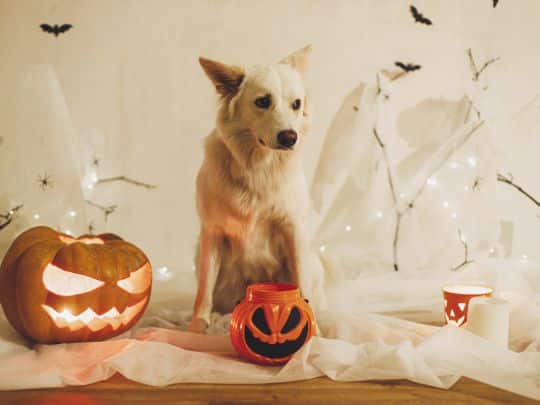
Halloween changes the normal rhythm of a home. The doorbell rings repeatedly, unfamiliar people appear in costumes, candy sits within reach, and decorations fill rooms that usually look familiar. For dogs and cats, all of this can be confusing, stressful, or potentially dangerous.
A little preparation can prevent many Halloween problems. Before trick-or-treaters arrive, pet owners should think about food hazards, escape risks, costumes, decorations, and their pet’s individual response to noise and visitors.
Use this Halloween pet safety checklist to prepare your home and know when a problem needs veterinary attention.
1. Put All Halloween Candy Completely Out of Reach
A candy bowl on a coffee table may seem harmless until a curious dog discovers it. Halloween candy should be stored inside a closed cabinet or another area pets cannot access.
Chocolate is one of the biggest concerns. Dark chocolate and baking chocolate contain higher concentrations of theobromine, which can cause serious illness in dogs and cats. Depending on the amount consumed and the pet’s size, chocolate poisoning may cause vomiting, diarrhea, restlessness, an increased heart rate, tremors, or seizures.
Sugar-free products require particular attention because some contain xylitol. Xylitol can be life-threatening to dogs and may cause a dangerous drop in blood sugar.
Do not forget about candy wrappers. Foil, plastic, and cellophane can also cause problems if swallowed.
If you suspect your pet ate chocolate, xylitol, or another questionable ingredient, contact a veterinary professional promptly rather than waiting for symptoms.
2. Create a Quiet Room Before Visitors Arrive
Some pets enjoy meeting visitors. Others become nervous as soon as the first person approaches the door.
Repeated knocking, doorbells, excited children, masks, and unfamiliar voices can make Halloween particularly stressful. A normally calm pet may hide, bark excessively, pace, tremble, or try to escape.
Before trick-or-treating begins, prepare a comfortable room away from the front door. Include familiar bedding, fresh water, favorite toys, and other items your pet associates with relaxation.
Cats may appreciate a covered bed or another safe hiding place. Dogs may settle more easily with a familiar toy or food puzzle.
Do not force a frightened pet to greet visitors. Giving them distance from the activity is often the safer choice.
3. Secure Doors, Gates, Windows, and Screens
The front door may open dozens of times on Halloween night. That creates repeated opportunities for an excited or frightened pet to slip outside.
Check doors, gates, fences, and window screens before celebrations begin. If your pet tends to rush toward an open door, keep them in another room or behind a secure barrier during trick-or-treating.
Dogs taken outdoors should remain securely leashed. Even a dog that normally walks calmly may react differently to costumes, crowds, flashing decorations, or sudden noises.
If your pet escapes and is injured while running outside, contact a veterinarian in Chesapeake for guidance. Injuries are not always immediately obvious, particularly after a fall or collision.
4. Check Your Pet’s Identification Before Halloween
A collar and identification tag can become extremely important if a pet gets loose. Make sure the tag is readable and contains current contact information.
If your pet has a microchip, confirm that the associated contact details are current as well.
Identification is important for cats, too. Indoor cats can escape through a frequently opened door, especially when frightened by unfamiliar sounds.
If you plan to walk your dog after dark, use a secure leash and consider reflective equipment that makes your pet easier to see.
5. Choose Pet Costumes Based on Comfort, Not Appearance
A costume may look cute in a photo but still make a pet uncomfortable.
If your dog or cat does not normally tolerate clothing, Halloween is not the time to force it. Stress signals may include freezing, hiding, trying to remove the outfit, flattened ears, excessive panting, vocalizing, or refusing to move normally.
For pets that tolerate costumes, check the fit carefully. The outfit should not interfere with:
- Breathing
- Vision
- Hearing
- Walking and normal movement
- Barking or meowing
- Drinking
- Normal bathroom habits
Remove loose strings, buttons, bells, or decorations that could be chewed and swallowed. Never leave a costumed pet unattended. A simple Halloween-themed collar or bandana may be enough for pets that dislike full costumes.
6. Keep Candles and Jack-O’-Lanterns Away From Pets
Open flames and curious animals are a dangerous combination.
A dog can knock over a candle with a wagging tail. A curious cat may get too close to a jack-o’-lantern and burn its whiskers, paws, or coat.
Place candles where pets cannot reach them, or consider flameless alternatives.
Electrical decorations also deserve attention. Secure cords so pets cannot chew them or become tangled. Decorations with small removable pieces should stay off the floor.
If a pet suffers a burn or electrical injury, do not rely on home treatment alone. Contact a vet near you and explain what happened so you can determine the appropriate next step.
7. Keep Glow Sticks and Small Decorations Off the Floor
Glow sticks and glow jewelry can attract playful cats and dogs. Biting into one may expose a pet to the bitter liquid inside, which can cause significant drooling and agitation.
Small plastic spiders, fake eyeballs, costume accessories, and other decorations can also become choking or foreign-body hazards.
Before going to bed, check floors, couches, and areas where children opened candy or played with Halloween items. A quick cleanup can prevent a curious pet from finding something overnight.
8. Do Not Share Human Halloween Treats
Your pet does not need candy to participate in Halloween.
Instead, offer their regular treats or a pet-safe snack in an appropriate portion. Introducing several unfamiliar foods at once can cause digestive upset, particularly in pets with sensitive stomachs.
Be especially careful around party food. Foods containing chocolate, raisins, certain sugar substitutes, or other unsafe ingredients should remain inaccessible to pets.
Ask guests and children not to feed your dog or cat without permission.
9. Watch for Stress That Does Not Settle Down
Temporary nervousness during a busy evening is not unusual. Persistent or severe distress deserves more attention.
Watch for behaviors such as:
- Continuous trembling or shaking
- Persistent hiding
- Excessive panting unrelated to heat or exercise
- Repeated attempts to escape
- Destructive behavior
- Unusual aggression
- Refusing food long after the activity ends
- Vomiting or diarrhea associated with severe stress
- Difficulty settling even after the house becomes quiet
Pets with known noise or visitor anxiety may benefit from a veterinary plan made before Halloween. Do not give human sedatives or other medications unless your veterinarian specifically instructs you to do so.
10. Know Which Halloween Problems Cannot Wait
Some situations require more than monitoring your pet at home.
Prompt veterinary attention may be needed if your pet:
- Eats chocolate or a product containing xylitol
- Swallows a candy wrapper, toy, costume piece, or decoration
- Has repeated vomiting or diarrhea
- Develops tremors or seizures
- Collapses or becomes unusually weak
- Has difficulty breathing
- Suffers a burn or electrical injury
- Is struck by a vehicle
- Develops significant swelling or pain
- Cannot walk or stand normally
- Shows a sudden, concerning change in behavior
When something unexpected happens, calling a veterinarian in Chesapeake can help you determine whether your pet needs prompt evaluation. Do not induce vomiting or give medications unless a veterinary professional specifically directs you to do so.
A Quick Halloween Pet Safety Checklist
Before Halloween evening begins, run through this list:
- Store candy inside a secure cabinet.
- Keep chocolate and xylitol-containing products away from pets.
- Prepare a quiet room for your dog or cat.
- Secure doors, gates, windows, and screens.
- Check identification tags and microchip information.
- Keep dogs securely leashed outdoors.
- Skip costumes if your pet appears uncomfortable.
- Remove small or dangling costume pieces.
- Keep candles and electrical cords inaccessible.
- Pick up glow sticks, wrappers, and small decorations.
- Ask guests not to feed your pet.
- Keep your veterinarian’s contact information available.
- Watch your pet closely for unusual symptoms or behavior.
Taking a few minutes to complete this checklist can make Halloween easier for everyone in the household.
Keep Halloween Fun Without Compromising Your Pet’s Safety
Halloween should leave you with photos and happy memories, not an unexpected health scare. Knowing your pet’s limits and removing common hazards before the evening begins can prevent many problems.
For pet owners in Chesapeake, Edinburgh Animal Hospital provides veterinary care ranging from routine health services to evaluation of unexpected illnesses and injuries. The hospital also offers urgent pet care for concerns that may need timely veterinary assessment.
Practice owners Dr. Geoff Campbell and Dr. Shane Mulderrig are part of the veterinary team caring for local pets. Dr. Campbell opened the hospital in 2006, while Dr. Mulderrig has particular professional interests in internal medicine, surgery, and dermatology.
If your dog or cat develops a concerning problem around Halloween, having a trusted vet near you can help you understand what your pet needs next. Contact Edinburgh Animal Hospital at (757) 432-0488 to discuss your concerns or schedule veterinary care.
Frequently Asked Questions
1. What Halloween candy is most dangerous for dogs and cats?
Ans: Chocolate is a major concern, particularly dark and baking chocolate. Products containing xylitol can be especially dangerous to dogs. Candy may also contain other problematic ingredients, while wrappers can become choking or intestinal obstruction hazards. Contact a veterinarian promptly if your pet eats something potentially toxic.
2. Should I let my dog go trick-or-treating with my family?
Ans: That depends on your dog’s temperament. A dog that becomes nervous around crowds, children, unusual clothing, or loud sounds may be happier at home. If your dog joins you, use a secure leash, visible identification, and reflective gear after dark.
3. How can Edinburgh Animal Hospital help if my pet becomes sick on Halloween?
Ans: Edinburgh Animal Hospital offers urgent pet care in Chesapeake for sudden illnesses, minor injuries, and other unexpected changes that may require timely evaluation. The veterinary team can examine your pet and determine whether diagnostics, treatment, home monitoring, or additional care is appropriate.
4. What should I do if my dog eats chocolate during Halloween?
Ans: Remove any remaining chocolate and save the packaging so the type and possible amount can be identified. Contact a veterinarian promptly. The risk depends partly on the type and quantity of chocolate and your dog’s size, so waiting for symptoms is not recommended.
5. Can Chesapeake pet owners contact Edinburgh Animal Hospital about an unexpected Halloween injury?
Ans: Yes. Edinburgh Animal Hospital provides urgent pet care for unexpected illnesses, injuries, and sudden health changes. The practice is located at 233 Hillcrest Parkway, Suite 3, in Chesapeake and can be reached at (757) 432-0488.
6. Can Edinburgh Animal Hospital help prepare an anxious pet before Halloween?
Ans: Pet owners concerned about how their dog or cat may handle Halloween can discuss those concerns with Edinburgh Animal Hospital before the holiday. Planning ahead gives the veterinary team an opportunity to consider your pet’s behavior, health, and individual needs rather than waiting until Halloween night becomes stressful.

